The S&P 500 closed Friday at a fresh all-time high.
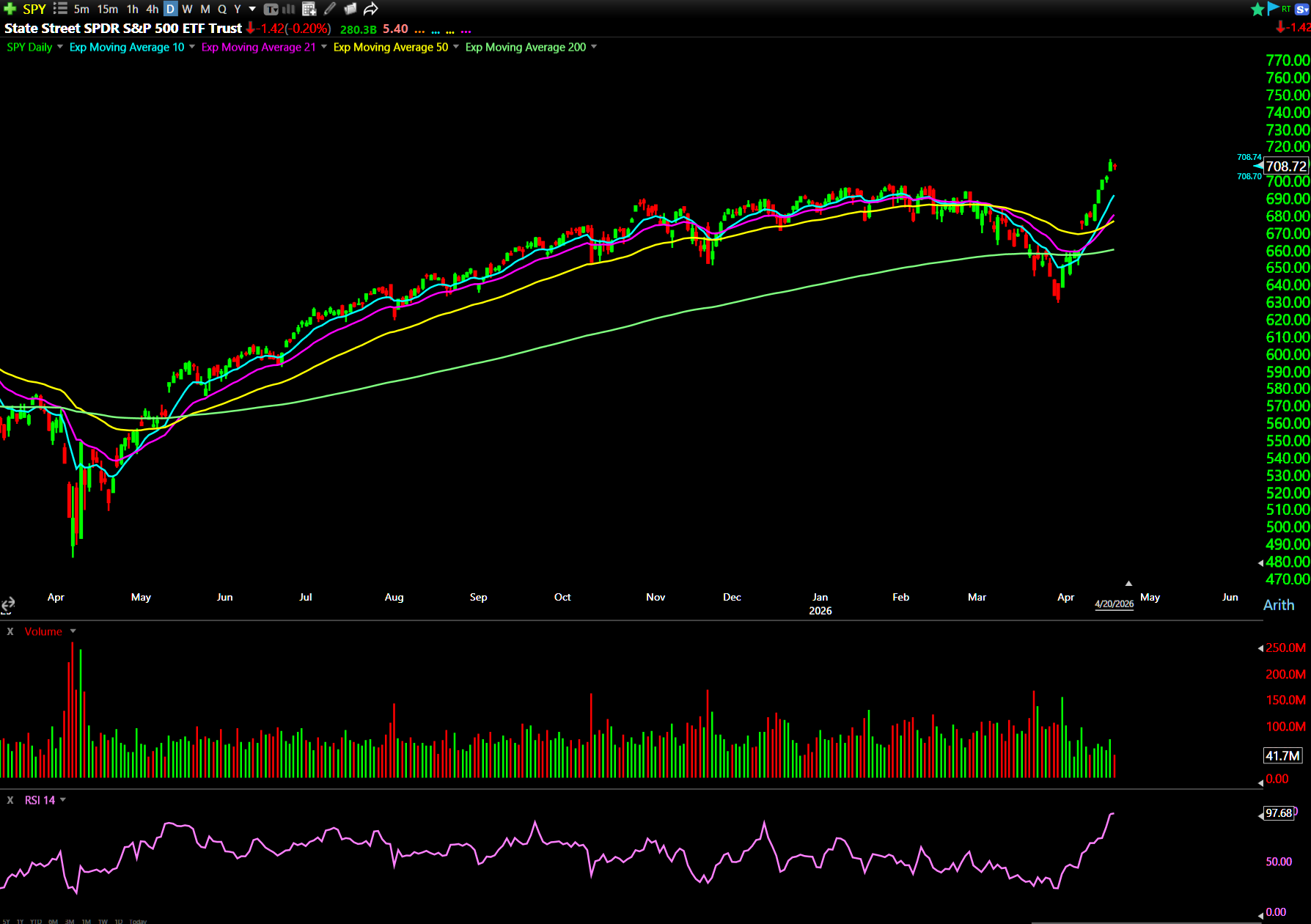
Think about the news in the background of that rally:
- The ceasefire that collapsed and came back.
- Oil above $100, then below, then climbing again.
- The Navy firing on an Iranian cargo vessel over the weekend.
The market digested all of that and still went straight up.
Since March 31, the headlines and the price action have been pointing in opposite directions.
There has been no meaningful movement towards ending the war on the diplomatic or military front.
But the market is smarter than the idiots on the news. Traders have correctly begun to price in two probabilities:
- Trump doesn’t want a prolonged ground invasion.
- Iran doesn’t have the military capability to take on the U.S.
The result? An effective stalemate with small events scattered throughout the news.
So, what does that mean for your trading?
I’ve watched this happen before. The only thing that’s kept me in the game across more than two decades of markets is one edge. One thing Wall Street can’t replicate.
I can change my mind.
And so can you…
The Edge
My whole career has been about trading what the chart shows, not what the headline says. When the picture changes, I change with it.
Go back and read my own pieces from the last three weeks.
On April 7, I covered my Puts on Exxon Mobil Corporation (NYSE: XOM) when peace-talk optimism dragged the energy sector lower.
Then I flipped and rode the rally on Occidental Petroleum Corporation (NYSE: OXY) when Iran denied the peace talks and the selloff got overextended. Same sector, opposite directions, both winners.
The edge is the willingness to be long at 9:30 and short by lunch, because the market demanded it.
Institutions can’t do that. It kills them in a market like this one.
Why Wall Street Can’t Flip
Every seat on Wall Street has a constraint. I learned this the hard way in my institutional days.
A long-only fund can’t go short when the market turns. A value fund can’t suddenly chase momentum. And a sector specialist is stuck in the sector no matter what the rest of the market is doing.
Before any of those managers can pivot, they need approval from risk, from compliance, from the investment committee, and from the LPs who signed up for a specific strategy.
By the time the pivot happens, the edge is gone.
Retail gets to skip all of that.
You want to be long XOM at 9:31 and short OXY by 11? Click. You want to flip IWM from puts to calls because the pendulum swung? Click again. You don’t need to convince anyone or file anything. You see it, you do it, you move on.
That freedom is the single biggest structural advantage retail has over Wall Street. Almost nobody uses it.
Why You’re Not Using It
Traders don’t flip because of ego. They bought the setup on Monday. They told the group chat. They posted the chart. By Wednesday, the chart is fighting them (and they can’t let go).
I don’t do that. The expensive lesson landed early. The market doesn’t care what you told the group chat.
Look at what happened over the last three weeks. The market ran 12% in a month. Retail buying has spiked from the 10th percentile to the 55th. The people chasing the rally now are the ones who held bearish theses all the way through and finally broke.
You don’t have to be one of them.
What To Do This Week
The setup has too many competing signals to force a direction. Indexes are at all-time highs. The situation in Iran reescalated over the weekend.
My approach: stay small, move fast, and be ready to flip.
Trade the chart, not the headlines.
And when you catch yourself defending a losing position because you committed to it on Monday, remember who’s paying to do the opposite.
Wall Street is paying entire committees to prevent the one move you can make for free.
Be willing to change your mind.
That’s your edge.
Stay Street Smart,
Jeff Zananiri
*Past performance does not indicate future results, Not typical.