The U.S. and Iran reached a peace deal last week.
And as a result, I’m watching a very specific trade setup…
War is expensive. There’s no way around it.
And when that much money changes hands, it creates a wave of momentum in the market that we can ride for gains.
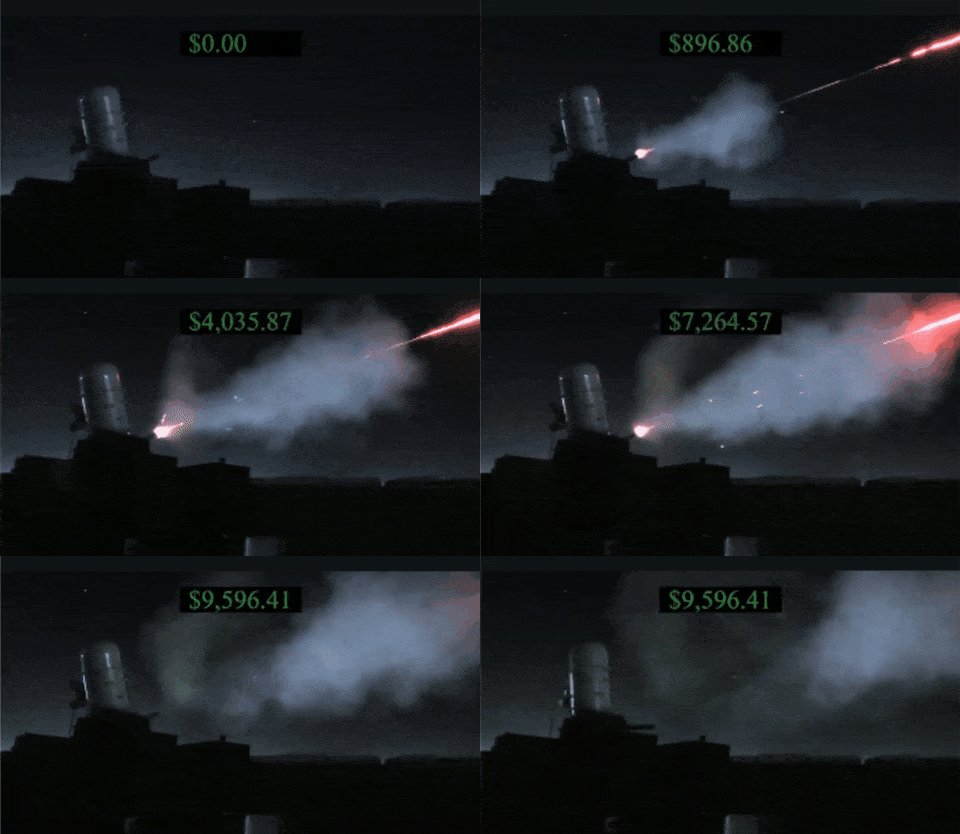
Luckily, the destruction is over… for now.
I never root for conflict in the world. But ignoring the market’s reaction to war is almost just as immature.
When the market hands you gains, take them.
Most people think about the price of oil in relation to the war in Iran. But there’s an entirely different trade, with a similar correlation, that you haven’t considered.
War Makes Everything More Expensive
Let’s start at the gas pump…
The national average sits close to $4 per gallon, which is 40% higher than it was back in late February when the war started.
In a handful of states, drivers are staring at $5 per gallon price tags.
There’s extra money leaving people’s wallets every week.
And the price of gas is one of the loudest indicators in the economy. When it spikes, almost everyone feels it.
As a result, the May Consumer Price Index on June 10 read 4.2% year-over-year.
That’s the hottest annual inflation reading in three years. Energy did most of the damage. Gasoline alone jumped 7% in a single month, and it now runs about 40% above the start of this year.
Higher fuel costs bleed into land travel, airfare, groceries, and anything that’s trucked, shipped, or flown from one place to another.
Even though the war is over, experts say inflation could linger as oil supply issues take time to resolve.
Those higher prices cause a chain reaction for policymakers…
The Federal Reserve’s job is to keep prices from running too hot. When inflation climbs, the Fed’s playbook tells it to raise interest rates to cool things down.
Higher rates slow borrowing, slow spending, and drag prices back toward earth.
And right now the Fed has a brand-new boss…
Kevin Warsh was sworn in as the 17th chair of the Federal Reserve on May 22.
He’s been in the seat for about a month. And after his first meeting, he held rates steady.
President Trump spent years hammering Jerome Powell to cut rates. Powell wouldn’t budge. Now Powell is out of the chair, and Trump finally has his guy running the show.
But Warsh inherited 4.2% inflation on day one.
Warsh can’t afford to look soft on prices in his first month. If he cuts too soon, with inflation this hot, he could torch all of his credibility before he’s finished unpacking.
The market knows it. Futures traders already started betting that the Fed’s next move isn’t a cut at all… it could be a hike.
That part connects perfectly to the trade I’m watching.
Higher Rates Crush Bond Prices
This is the relationship every trader needs burned into their brain…
When interest rates rise, bond prices fall. They move in opposite directions, like two ends of a seesaw.
The logic is simple. Say you own a bond paying 4%. Then, fresh bonds hit the market paying 5% because interest rates are higher. Nobody wants your old 4% bond anymore, and to sell it, you have to drop the price. Rising rates make every existing bond worth less.
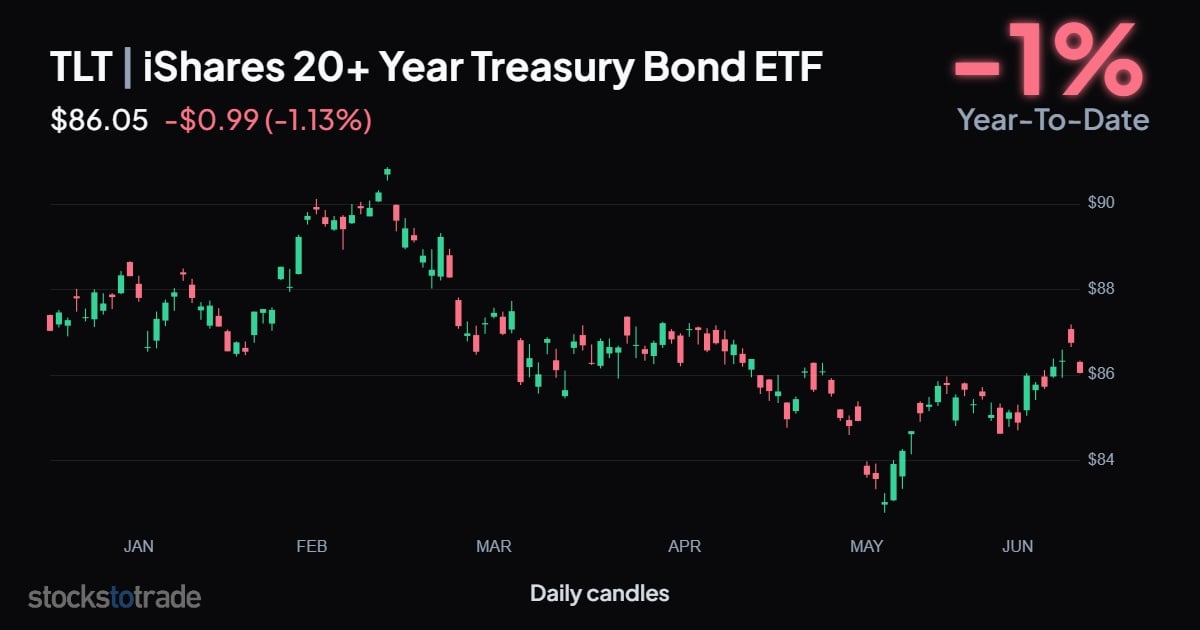
That brings me to the iShares 20+ Year Treasury Bond ETF (NASDAQ: TLT).
TLT holds long-dated U.S. Treasuries, the most rate-sensitive bonds on the market. The longer the maturity, the harder the hit when rates climb.
TLT peaked this year in February. From there, it fell lower month after month, bottoming around $80 in May.
It’s clawed back to roughly $86 since, but it’s still down on the year. And it’s running straight into the same pressure that started the slide: inflation.
My Trade Idea
Now put everything together…
- War drove prices higher.
- Higher prices forced inflation to a three-year high.
- A brand-new Fed chair can’t be seen cutting into that fire.
- The market is leaning toward higher rates, not lower.
Every one of those arrows points in the same direction for bonds: down.
I’m watching TLT for a move lower in the coming weeks. And I’m using puts to build a position.
A put contract gains value as the underlying stock drops. If TLT rolls over and grinds back toward the May’s lows, put contracts allow me to ride the move with leverage while my risk stays capped at the cost of the contracts.
Don’t force this trade. Nothing is a 100% guarantee in the market.
But with the entire economy pointing at potentially higher interest rates, we’re already on track for a strong setup.
Let the chart guide your entry.
This is one of the biggest catalysts in the market. The correlation goes back decades, but the crowd is preoccupied with oil prices while the best setup is in the bond market.
Watch TLT and any rate chatter from the Fed this week.
Focus on short-dated put contracts, and build size when the chart hits solid resistance to the upside.
There’s a big slide coming. Get ready to ride it.
Stay Street Smart,
Jeff Zananiri
*Past performance does not indicate future results, Not typical.